
Let’s look at the 9 best cat litters for 2026 across different types: clumping, non-clumping, crystal, natural, and low-dust options. These aren’t random picks. They’re based on what actually works for odor control, tracking, and cat acceptance.
The right litter controls odor, minimizes dust, stays where it’s supposed to, and, most importantly, your cat will actually use it.
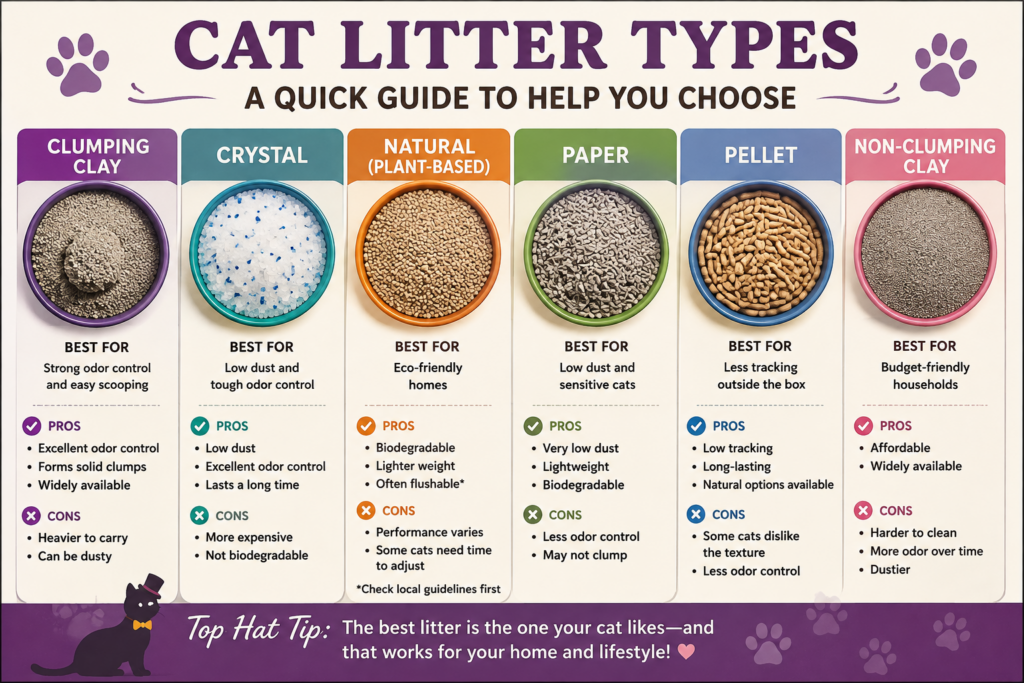
Types of Cat Litter & What to Look For
Before You Buy
Thinking about upgrading to an automatic litter box? Most self-cleaning litter boxes work best with quality clumping litter, and some models even recommend specific brands. If you’re shopping for both, check out our guide to the 7 Best Self-Cleaning Litter Boxes That Are Worth the Money to see which automatic boxes pair best with today’s top litters.
Top 9 Cat Litters on Amazon
1. Dr. Elsey’s Ultra Premium Clumping Cat Litter
The gold standard for clumping clay litter. Hard clumps, excellent odor control, low dust formula. Unscented, so it doesn’t overwhelm sensitive cats. Heavier texture means less tracking than fine litters.
What’s Great:
- Forms rock-hard clumps that don’t break apart
- 99.9% dust-free (actually lives up to the claim)
- Superior odor control without added fragrances
- Hypoallergenic and gentle on paws
- Vets frequently recommend it
What’s Not:
- Heavy bags (40 lbs is a workout to carry)
- More expensive than basic clay litters
- Some tracking, though less than competitors

| Dr. Elsey’s Ultra UnScented Clumping Clay Cat Litter
|
2. World’s Best Cat Litter (Multi-Cat Formula)
Made from whole-kernel corn, this natural litter clumps surprisingly well. Lightweight, flushable, and controls odor naturally without chemicals. The multi-cat formula has extra odor-fighting power.
What’s Great:
- Clumps tight for easy scooping
- Completely natural and biodegradable
- Safe to flush in small amounts
- Lightweight (easier to carry and pour)
- Pleasant, natural scent
What’s Not:
- More expensive per pound
- Some cats try to eat it (corn-based)
- Can track if cats kick litter around
- Doesn’t last as long as clay

| World’s Best Cat Litter (Multi-Cat Formula)
|
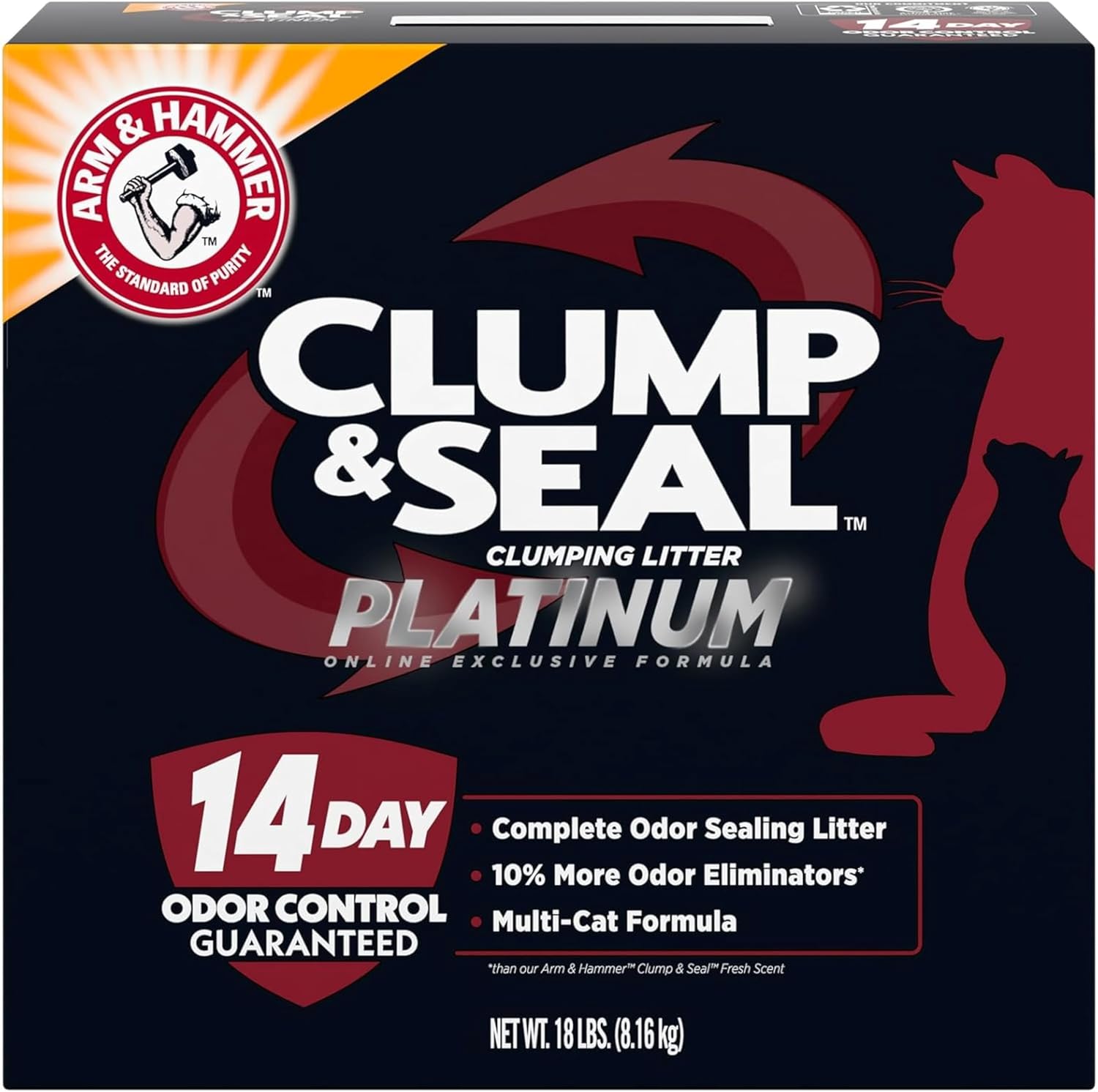
3. Arm & Hammer Clump & Seal Platinum
Budget-friendly clumping litter with serious odor control. Baking soda and micro-granules seal in odors. 7-day odor control guarantee (actually holds up). Good value for the price.
What’s Great:
- Excellent odor control for the cost
- Clumps solidly
- Low dust compared to cheap clay litters
- Widely available in stores
- Good for multi-cat households
What’s Not:
- Tracks more than premium litters
- Scented (some cats dislike it)
- Not as dust-free as premium options
- Can stick to box bottom if not maintained
| Arm & Hammer Clump & Seal Platinum
|
4. Fresh Step Advanced Clumping Cat Litter
Activated charcoal formula with Febreze-like odor elimination. Clumps well, controls odor for up to 10 days. Low dust, paw-activated fragrance. Good middle-ground option.
What’s Great:
- Strong odor control
- Clumps form quickly and hold together
- Low dust formula
- Pleasant scent (if you like scented litter)
- Available everywhere
What’s Not:
- Scent is strong (not ideal for sensitive cats)
- Tracks moderately
- Contains synthetic fragrances
- Heavier than natural alternatives

| Fresh Step Advanced Clumping Cat Litter
|
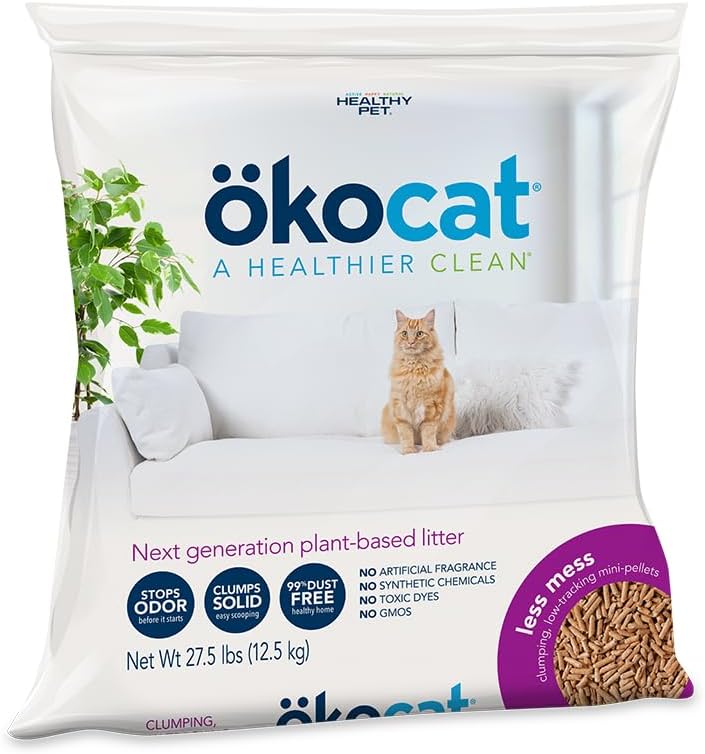
5. Ökocat Natural Wood Clumping Litter
Made from sustainably sourced wood fiber. Clumps surprisingly well for a natural litter. Lightweight, biodegradable, naturally absorbs odors. No synthetic chemicals or fragrances.
What’s Great:
- Eco-friendly and biodegradable
- Lighter weight than clay
- Natural odor absorption (no chemicals)
- Low dust
- Soft on paws
What’s Not:
- Doesn’t clump as hard as clay
- More expensive than clay options
- Wood scent isn’t for everyone
- Some tracking with lighter pieces
| Ökocat Natural Wood Clumping Litter
|
6. Boxiecat Premium Clumping Clay Litter
Ultra-clean clay litter with hard, flat clumps. Scoop-friendly design makes cleaning easier. Low dust, long-lasting, unscented. Stays cleaner longer between full changes.
What’s Great:
- Forms uniquely flat clumps (easier to scoop)
- Truly 99.9% dust-free
- Unscented but controls odor well
- Long-lasting (don’t need as much)
- Stays fresh-smelling longer
What’s Not:
- Premium pricing
- Heavy bags
- Can track some with enthusiastic diggers
- Harder to find in physical stores

| Boxiecat Premium Clumping Clay Litter
|
7. Tidy Cats Lightweight Free & Clean
Lightweight clumping litter (half the weight of traditional clay). Unscented and hypoallergenic. Good odor control without fragrances. Easy to pour and carry.
What’s Great:
- Genuinely lightweight (easy handling)
- Unscented (great for sensitive cats/humans)
- Clumps well for a lightweight litter
- Affordable
- Low dust
What’s Not:
- Tracks more due to lighter weight
- Clumps aren’t as hard as heavy clay
- Uses more litter over time
- Can get kicked out of box easily

| Purina Tidy Cats LightWeight Free and Clean Litter
|
8. sWheat Scoop Multi-Cat Natural Wheat Litter
Made from naturally processed wheat. Clumps on contact, neutralizes odor naturally. Flushable, biodegradable, renewable resource. No added dyes or perfumes.
What’s Great:
- Natural clumping from wheat starches
- Flushable and septic-safe
- Biodegradable and eco-friendly
- Low dust
- Pleasant natural scent
What’s Not:
- Can attract bugs if stored improperly
- Some cats eat it (wheat-based)
- Doesn’t last as long as clay
- More expensive than clay options

| sWheat Scoop Multi-Cat Natural Wheat Litter
|
9. Fresh News Recycled Paper Pellet Litter
Made from 100% recycled paper. Pellet form means virtually no dust and minimal tracking. Excellent for post-surgery cats or those with respiratory issues. Non-toxic if ingested.
What’s Great:
- 99% dust-free (best for allergies)
- Minimal tracking (pellets stay put)
- Safe for kittens and post-surgery cats
- Made from recycled materials
- Soft on sensitive paws
What’s Not:
- Doesn’t clump (absorbs instead)
- Requires full box changes more often
- Some cats dislike pellet texture
- Can be messy when wet pellets break down

| Fresh News Recycled Paper Pellet Litter
|
How to Transition to New Litter
Cats hate sudden changes. Switch litters gradually to avoid litter box strikes.
Week 1: Mix 25% new litter with 75% old litter
Week 2: Mix 50/50
Week 3: Mix 75% new litter with 25% old litter
Week 4: 100% new litter
If your cat protests at any stage (peeing outside the box, avoiding the litter box), slow down the transition. Some cats need more time to adjust.
Pro tip: Keep a small amount of old litter on hand in case you need to go back temporarily.
Special Considerations
Multiple Cats: Use multi-cat formulas with stronger odor control. You’ll need more litter boxes (one per cat plus one extra) and will scoop more frequently. Clumping litter works best for multi-cat homes.
Kittens: Avoid clumping litter for kittens under 4 months because they might eat it. Use non-clumping clay or paper pellet litter until they’re older. Switch to clumping litter once they stop the “taste everything” phase.
Senior or Sick Cats: Low-dust litters are essential. Consider softer textures like paper pellets for cats with arthritis or sensitive paws. Avoid heavily scented litters that might deter a cat feeling unwell.
Allergies (Human or Cat): Go for 99% dust-free options: Dr. Elsey’s, Boxiecat, or paper pellet litters. Avoid clay litters with added fragrances. Natural litters often produce less dust overall.
Conclusion
Once you’ve found the perfect litter, the next upgrade might be the litter box itself. If you’re tired of daily scooping, don’t miss our guide to the 7 Best Self-Cleaning Litter Boxes That Are Worth the Money, where we compare the top automatic litter boxes for convenience, odor control, and multi-cat homes.
Creating a happier litter box is just one part of keeping your cat comfortable at home. If you’re looking for more practical cat care advice, you may also enjoy our guide on How to Get Your Cat to Sleep Through the Night, where we share simple routines that encourage better sleep for both cats and their humans.
What litter works best for your cat? Share your favorites in the comments!