
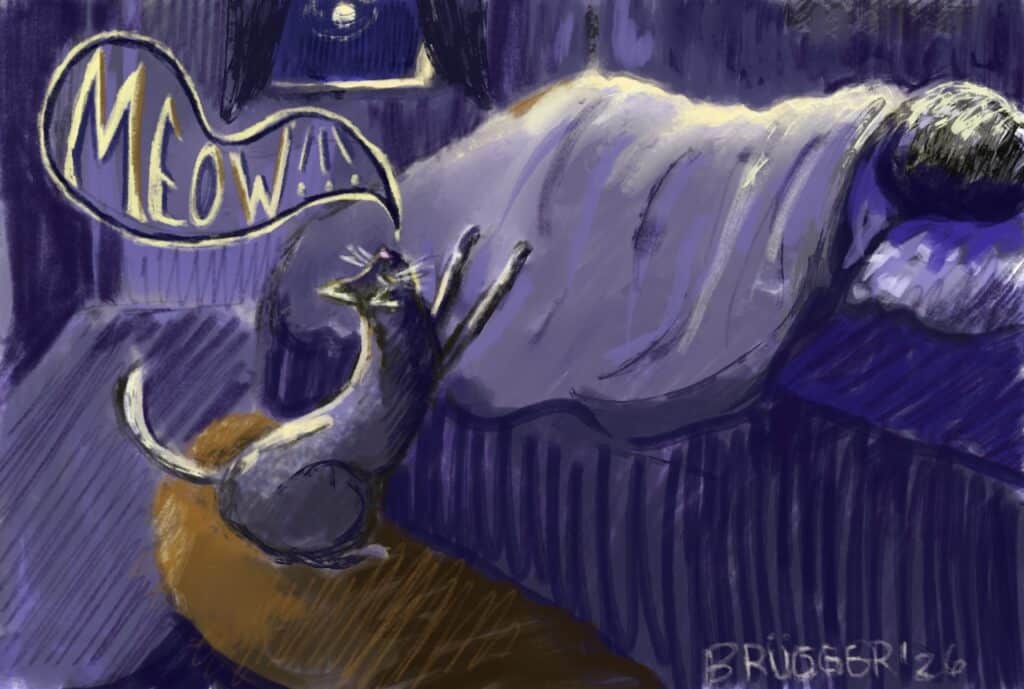
It’s 3:02 AM. I am deep in sleep. Then I hear that insistent meowing that cuts through walls, and my deepest dreams. My cat wants something. Maybe food. Maybe attention. Maybe she just decided 3 AM is party time and I am invited whether I like it or not.
I was there this very morning in fact. The party was not fun. Sometimes she just wants someone downstairs with her. Sometimes she wants to stare at me while I question my life choices.
This gotta stop, but How to Stop Your Cat from Waking You Up at 3 AM? Well, I researched a bunch of strategies so we can figure out what actually works. Here’s how to stop your cat from waking you up at 3 AM and reclaim your sleep.
Waking you up at 3 AM is often just one symptom of a larger nighttime routine. If you’re looking for a complete bedtime plan, be sure to read our guide on How to Get Your Cat to Sleep Through the Night, where we walk through a step-by-step routine that encourages better sleep for both you and your cat.
Why Your Cat Does This
Understanding the problem helps you fix it:
- Boredom and energy – Cats are most active at dawn/dusk. They napped all evening, now they’re ready to party
- Hunger – 13 hours between dinner and breakfast is a long time for a cat
- Attention-seeking – If you’ve responded before (even once), they learned meowing = results
- Loneliness – Some cats don’t like being alone at night
- Routine – If it’s been happening a while, it’s now a habit
They say most of these are fixable with consistency.
What NOT to Do
Before we get to solutions, stop doing these things:
❌ Don’t respond to the meowing – Going downstairs = attention = reward (my bad)
❌ Don’t feed them at 3 AM – You’re teaching them that waking you = food (my bad again)
❌ Don’t yell or spray water – Creates stress, doesn’t solve the problem (that just ain’t right…be better)
❌ Don’t give in “just this once” – One cave-in resets all your progress (me again)
Every time you respond, you’re training them to keep doing it.
Recommended Remedies

1. Tire Them Out Before Bed
This is the most effective strategy I’ve found, and it’s actually worked for me. Playing intensely with your cat 30-60 minutes before bedtime makes a huge difference.
How to do it:
- Use interactive toys (feather wands, laser pointers, chase toys). See our top cat toy guide for recommendations.
- Play for 15-20 minutes until they’re panting slightly or lose interest
- Follow with a small meal or snack
- This mimics the natural “hunt, eat, groom, sleep” cycle
A tired cat is a sleeping cat. When I do this, I notice later wake-ups. Not perfect yet, but definitely better.
Consistency from me would be a great help.
2. Use an Automatic Feeder
This is a popular recommendation, though I haven’t tried it myself yet. The idea is to set an automatic feeder to dispense food at 5-6 AM so your cat learns to wait for the machine instead of waking you.
Why people say it works:
- Removes you from the breakfast equation
- Consistent timing establishes a new routine
- Takes about a week for cats to adjust
- You can sleep through their internal alarm clock
I already leave dry food out before bed, so I’m not sure this would solve my particular problem. But if your cat’s wake-ups are purely hunger-driven and you don’t free-feed, this could be a game-changer.
3. Ignore the Meowing Completely
When your cat meows at 3 AM, ignore it. No response. No acknowledgment. Nothing.
The hard part:
Your cat will escalate first (called an “extinction burst”). They’ll meow louder and longer because what used to work suddenly doesn’t. This lasts about a week.
How to survive:
- Earplugs or white noise machine
- Close your bedroom door
- Remind yourself that giving in resets everything
- Expect it to get worse before it gets better
I find this to be the most difficult of all, but I am sure my responses to her behavior have gotten me in the spot I find myself in now.
4. Close Your Bedroom Door
If your cat wakes you by jumping on the bed or meowing in your room, close the door. They’ll protest for a few nights, then adjust.
Make it easier:
- Put their bed, toys, and water outside your room
- Use white noise to muffle the meowing
- Stay consistent. Don’t open the door at 4 AM
This one ain’t for me. I prefer to keep my door open so I can hear everything in the house.
5. Provide Nighttime Entertainment
Give your cat things to do when they’re awake so they don’t need you for fun.
Ideas:
- Puzzle feeders with hidden treats
- Battery-operated toys that move on their own
- Rotating toy selection to keep things interesting
- Hide kibble around the house for scavenger hunts
The more interesting nighttime is, the less they’ll bother you.
What to Expect
Changing your cat’s behavior takes time. Most sources say consistency is key; if you stick with it, you should see improvement within 2-3 weeks. The first week is reportedly the hardest because cats will meow more when they realize their old tactics aren’t working (called an “extinction burst”).
I’m still in the middle of this process myself, so I can’t promise it’ll work perfectly. But the playtime strategy has definitely helped reduce how often my cat wakes me up, even if she still does it occasionally (like this morning).
Quick FAQ
Is ignoring my cat’s meowing cruel?
No. Your cat is safe, fed, and has everything they need. You’re teaching them that meowing doesn’t get results. That’s training, not cruelty.
My cat only does this on weekends. Why?
Cats notice schedule changes. If you sleep later on weekends, they get confused about breakfast time. Try keeping wake-up times consistent.
Will a second cat help?
Maybe. If your cat is lonely at night, a companion helps. But if they just want YOUR attention specifically, another cat won’t solve it.
What if something is actually wrong?
Learn your cat’s different meows. Distress sounds different from attention-seeking. Routine “feed me” meowing can be ignored. Scared or hurt meowing needs attention.
If your cat suddenly starts waking you up every night after years of sleeping peacefully—or the behavior is accompanied by excessive vocalizing, confusion, or other unusual symptoms—it could point to an underlying medical issue. PetMD has a helpful guide on common reasons cats stay awake at night including when it’s time to contact your veterinarian.
Conclusion
I’m just a tired cat owner trying to figure this out like you. From what I’ve read and experienced, tiring your cat out before bed seems to be the most effective strategy. Ignoring the meowing is hard but necessary. And consistency matters more than anything.
I’m still working on this myself, so I can’t promise you’ll have perfect sleep in a week. But if my small improvements mean anything, there’s hope for us all.
If you’ve dealt with 3 AM cat wake-ups and found something that works, please share it in the comments.