
Your cat sits by the window in January, staring at the snow like they’re personally offended by winter’s existence. They meow at the door like you’re being unreasonable for not letting them out in 15-degree weather.
What temperature is too cold for cats? Don’t let that fur coat fool you. Cats might act tough, but they’re basically tiny desert creatures wearing a light jacket.
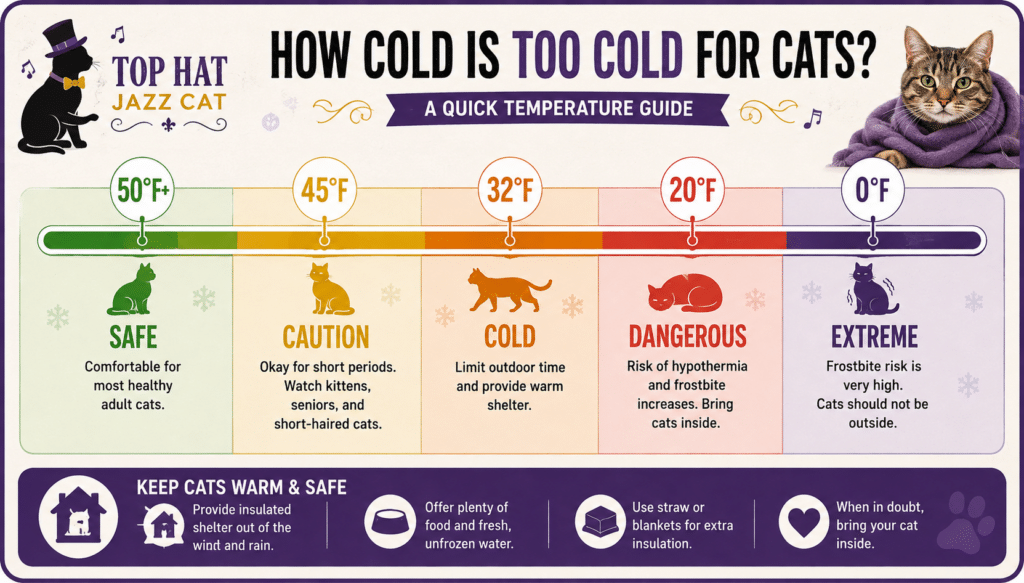
So what temperature is too cold for cats? Short answer: anything below 32°F is risky, and below 20°F is dangerous. But there’s more to it than just numbers on a thermometer. Let’s break down what temperatures are safe, when to worry, and how to keep your fuzzy drama queen comfortable when it’s freezing outside.
Temperature Guide: When to Worry
Here’s the quick temperature guide you actually came here for:
The Simple Rule:
If you’re uncomfortable outside without a coat, your cat is too. If it’s freezing to you, it’s dangerous for them.
Wind, rain, and snow make everything worse. A wet cat in 40-degree weather is in more danger than a dry cat at 30 degrees. Wet fur loses basically all its insulating power.
Why Cats Aren’t As Cold-Proof As They Look
They’re Desert Animals
Domestic cats evolved from African wildcats that lived in hot, dry climates. They’re built for heat, not cold. Their bodies are designed to stay cool, not warm up.
That Fur Coat Is Overrated
Yeah, they’re fluffy. But cat fur is more like a windbreaker than a winter parka. It provides some insulation, but not enough for real cold weather.
The cats with thick undercoats (Maine Coons, Norwegian Forest Cats) have better protection, but even they aren’t Arctic animals. And most regular house cats? Their fur is basically decorative.
Which Cats Get Cold Faster?
Some cats need warmth and shelter sooner than others.
Higher Cold Risk
- Kittens
- Senior cats
- Hairless breeds
- Short-haired cats
- Thin or underweight cats
- Cats with health problems
- Indoor cats not used to cold weather
Usually More Cold-Tolerant
- Healthy adult cats
- Long-haired breeds
- Cats with dense winter coats
- Healthy cats at a stable weight
- Outdoor cats gradually acclimated to cooler weather
A thick coat offers some protection, but no cat is immune to hypothermia, frostbite, freezing rain, or dangerous wind chills.
Indoor Cats Are Especially Soft
Indoor cats never develop proper winter coats because they live in climate-controlled homes. They’re like someone who’s lived in California their whole life suddenly dropped into Wisconsin in February. It’s not going to go well.
Outdoor cats that live outside year-round develop thicker coats and slightly better tolerance. But even they have serious limits once it gets below freezing.
Signs Your Cat Is Too Cold
This is your “time to worry” zone. Get them warmed up gently and monitor closely.
Emergency Red Flags (Get to the Vet NOW):
- Cat is barely responsive or unconscious
- Breathing is really slow or shallow
- Muscles are stiff and rigid
- Skin on ears, paws, or tail looks gray or white (that’s frostbite)
Cats exposed to freezing temperatures for extended periods can develop hypothermia, a dangerous condition in which the body’s core temperature drops below normal. Early warning signs include shivering, cold ears or paws, weakness, and unusual tiredness. If you suspect your cat is becoming hypothermic, move them to a warm, dry place and contact your veterinarian right away. For more information, read PetMD’s guide to hypothermia in cats
Indoor Cats Are Basically Tropical
Indoor cats are spoiled. There, I said it. They have zero cold tolerance because they’ve never needed any.
The Escape Problem
This is where things get scary. An indoor cat that accidentally gets out in winter is in immediate danger. They don’t know how to find shelter. They don’t have a thick coat. They panic and hide instead of coming when called.
It happens more than you’d think, someone leaves a door open for 30 seconds, cat slips out, and suddenly you’re searching in the freezing cold for a terrified cat who won’t respond to their name.
Prevention:
- Check before opening doors
- Keep cats in another room when people are coming/going
- Microchip them (even indoor cats)
- Maybe get one of those door alarms
Inside Temperature
Keep your house at least 65°F when you’re gone. Cats are comfortable in the same temps you are. If you’re cold, they’re cold.
Heated cat beds are amazing and totally safe if you get a good one. Cats obsess over them. Way better than having your cat sleep on your laptop because it’s warm.
What About Outdoor Cats?
Look, outdoor cats manage. They find shelters, grow thicker coats, and huddle together if they’re feral colony cats. But “surviving” isn’t the same as “doing great.”
Their Limits
Once it drops below 20°F, even outdoor-adapted cats are in real danger. Frostbite happens fast. Hypothermia is a serious risk. They can’t generate enough body heat to stay safe.
When to Bring Them In
If you have an outdoor cat, bring them inside when:
- Temperature drops below 32°F for extended periods
- Any time it’s below 20°F
- During storms, rain, or heavy snow
- Whenever wind chill is brutal
Most outdoor cats will happily come inside when it’s freezing. Give them a quiet room, a litter box, and they’ll adapt.
- Below 32°F is dangerous
- Below 20°F is an emergency
- Indoor cats have zero cold tolerance
- Even outdoor cats need shelter in freezing weather
Your cat might give you attitude about it, but keeping them warm and safe is part of the deal. They’ll forgive you once they’re curled up on their heated bed instead of freezing outside.
Now that your cat is staying warm and cozy indoors, you might notice a little more nighttime energy. If your feline friend has started turning 3 AM into playtime, don’t miss our guides on How to Stop Your Cat from Waking You Up at 3 AM. They cover practical ways to encourage better nighttime habits so everyone can get a more restful sleep.
Got a cat that’s obsessed with going out in winter? Share your struggle in the comments below!